
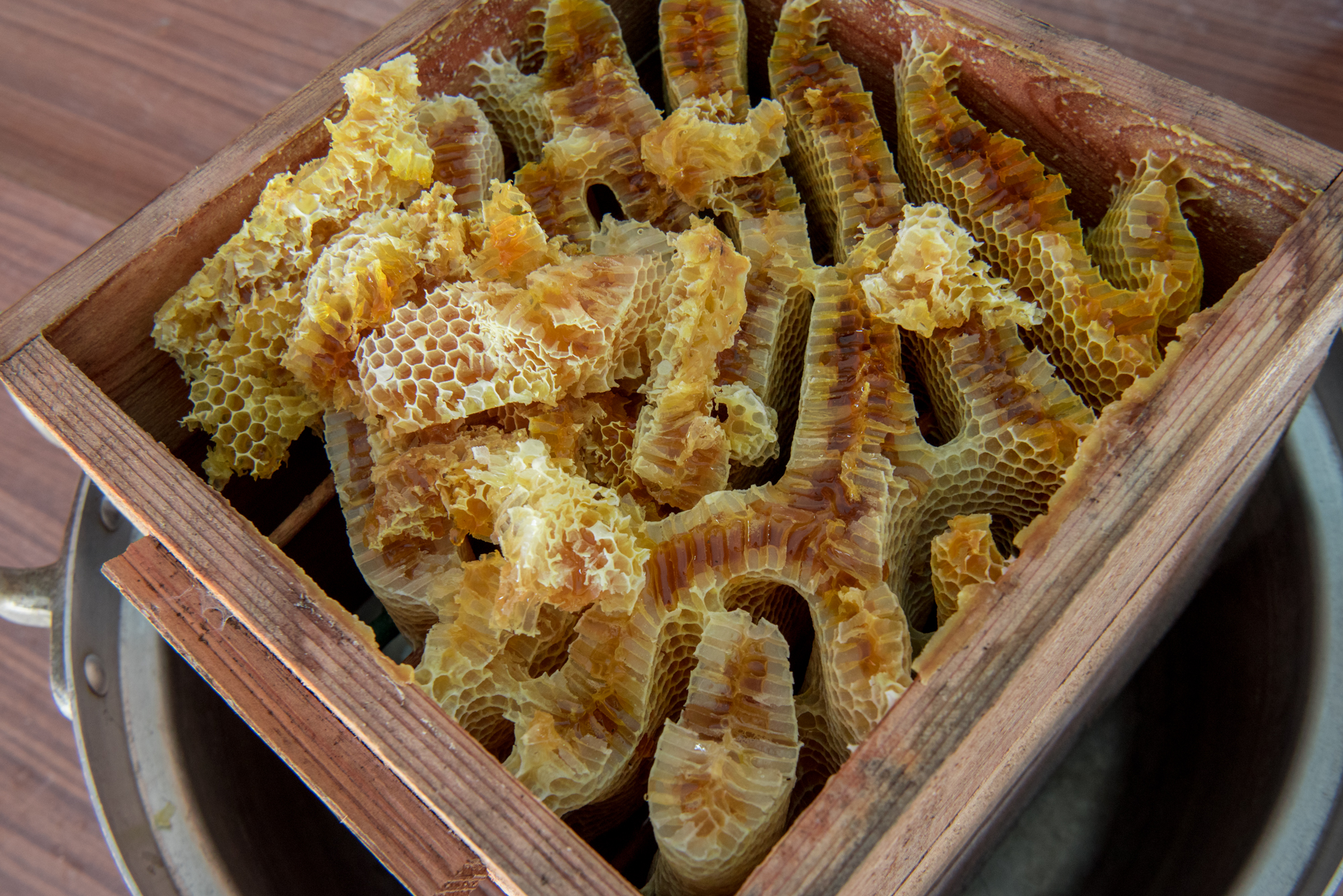
This is the perfect opportunity to attempt to return to somewhat regularly scheduled photo blogs. We recently had the wonderful experience of harvesting honey from our Japanese native bee colony! Japanese honeybees are quite different from European honeybees in many ways, so this is a totally new experience for us. By now we have a lot of experience with bees, but this involves learning a completely different beekeeping method. So this was a test harvest, for fun, with our friend and neighbor Tamayo-san. She runs a wonderful restaurant in our neighborhood, located inside a beautifully restored former akiya, Tamaya! We’ve made a video of her renovation, but a follow-up video is overdue.

The first thing you might notice is that this beehive looks different. It’s tall and skinny like a chimney! Japanese honeybees live in these square boxes. There are no removable frames inside, so the bees are free to build their beautiful honeycomb any way they like. They choose to fill the boxes starting at the top, and working their way down to the bottom, as if they were filling up a hollowed-out log.

For our test honey harvest, we chose to be sparing. We took one small box of honey off the top of the colony. The first step was to knock on the top of the hive, to encourage the honeybees to move down towards the bottom of the hive. Then, we removed the lid, which of course had a beautiful honeycomb pattern attached to it.


The next step was to remove the top box, and prepare it for transport to our honey workshop.


Back at the workshop, we had our first experience practicing the “crush and strain” method of honey extraction. It’s exactly as it sounds. Since there are no removable frames to spin out the honey from the honeycomb cells, the process essentially involves smashing the comb, then letting the honey drip out.


It certainly is a lovely design.

It was a little challenging to remove the honeycomb from the hive box, but we figured out a method.

Thank you for your help, Tamayo-san! We will all learn about keeping native Japanese honeybees together!

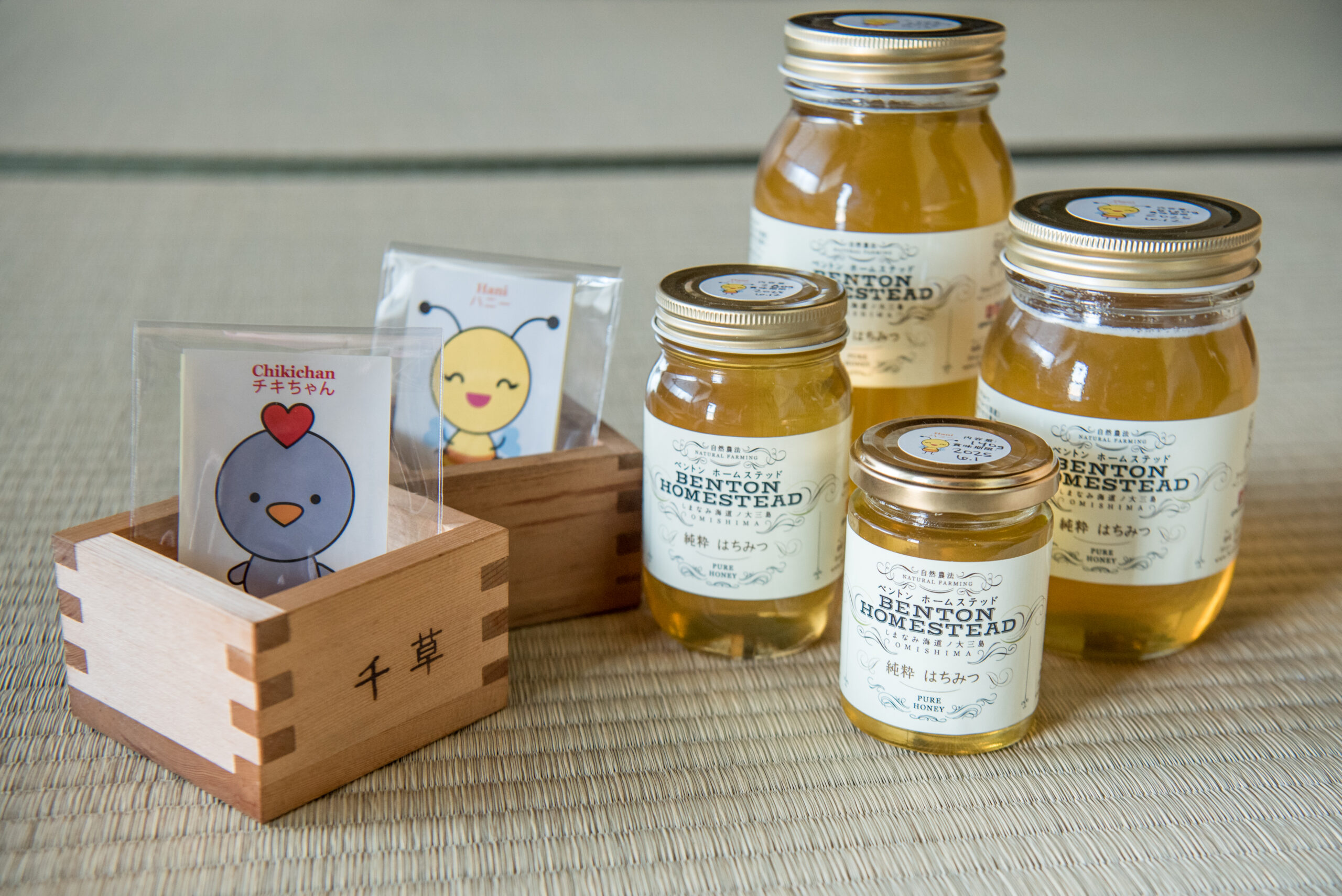
We got three jars of delicious honey! As we’re still learning, it was harvested a little early, so the sugar content was 1.5% below the 78% sugar content minimum. That means it’s not quite shelf stable, and could potentially ferment, so we will keep it in the fridge. Of course, we’re not selling this batch, so it’s perfectly fine for personal consumption. But in the future, we will continue working out a way to ensure the honey is at our preferred minimum sugar content level of 80%.
Of course, we returned the tools and crushed comb to the colony, so the honeybees could collect any remaining drops of honey for themselves. The bees are really good at not letting any drop go to waste!


If you’d like to watch the whole process, it’s documented in the video below! Our small Benton Homestead YouTube community has been steadily growing, and we now have over 5,000 subscribers. We host monthly 2-hour livestream chats to discuss all kinds of topics, and are averaging 2-5 dozen folks active in the chat, all with similar questions and similar adventures. Please feel free to join us!
Thanks for reading,
ダニとエバン ベントン
 日本語
日本語  English